
Understand what's coming. Then decide.
The futurist at last year's conference told your audience what was coming. Nobody told them what to do about it. This is the keynote that follows the futurist: it sends every person home with a business decision and a personal one.
Best for leadership conferences, industry conventions and organisations facing disruption. Thirty, forty-five or sixty minutes. Researched for your industry, your audience and your theme.
Most leaders sense the moment well. Fewer know what to do with it.
Australian leaders are good at sensing what is happening in their market. They are far less confident about what it means, which options it opens, and which one to commit to. The result is a strategy that everyone can describe and nobody has decided on.
AI, workforce pressure and global volatility are rewriting the economics of whole industries. The leaders who outperform are not the ones with the best forecast. They are the ones who can turn what they see into a choice, and a choice into a move.
- Name the blind spots and assumptions your strategy quietly depends on
- Read AI, workforce and market forces as signals rather than noise
- Turn foresight into options: what is really going on, what are our options, what will we do
- Focus scarce resources on the few moves that drive results
Two levels. Two decisions.
One business decision
Every delegate leaves with one strategic decision for their organisation, tested against the three questions and written down before they leave the room.
One personal decision
Strategy applies to a career and a life as much as to a company. Each person also leaves with one change they will make for themselves, because the business plan rarely holds without the personal one.
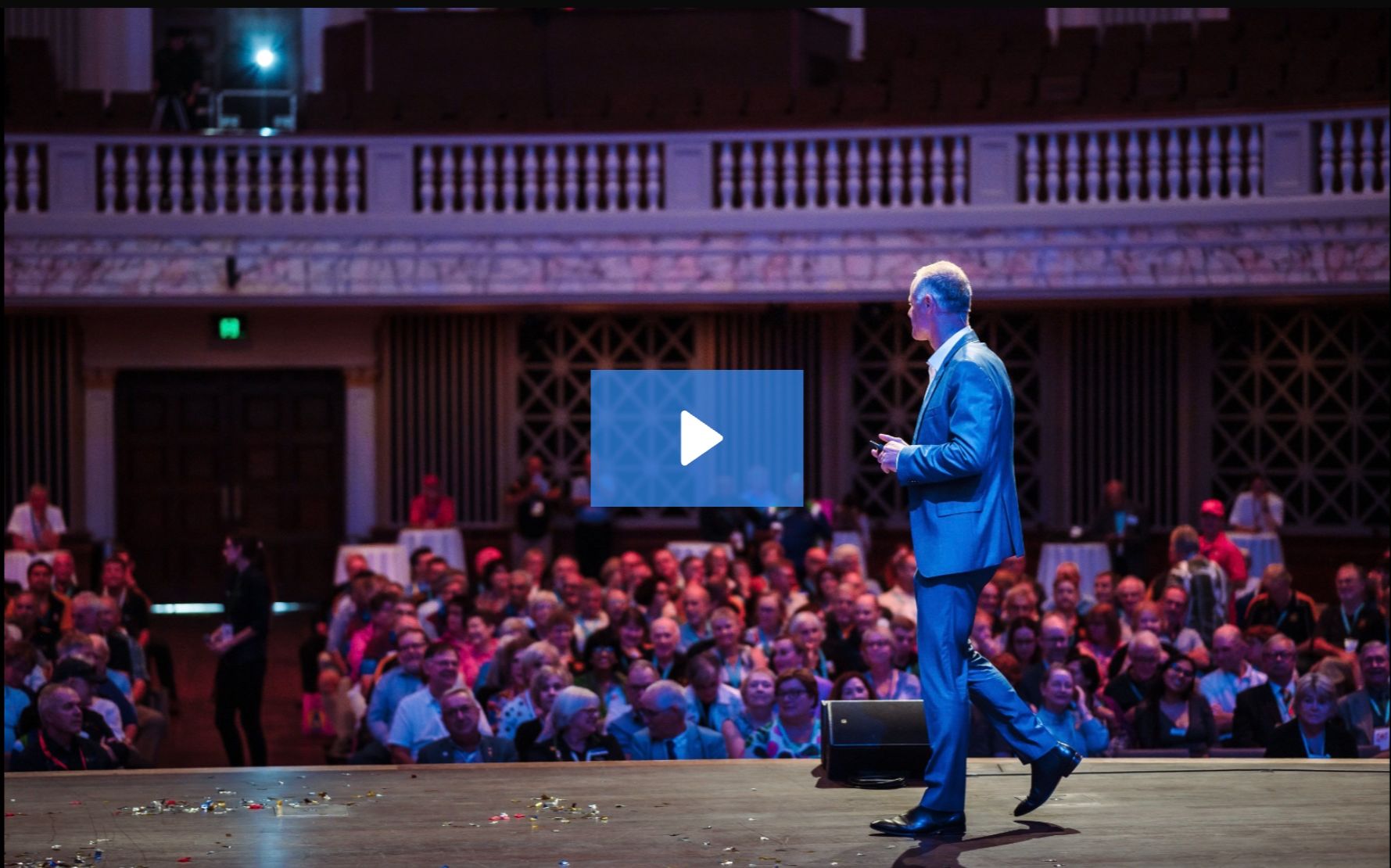
Thirty minutes from a live conference stage. John is a storyteller with a strategist's discipline: every story earns its place by moving the audience towards something they can use on Monday. Engaging enough to hold 2,000 delegates, practical enough for a boardroom.
"Our entire team and network thoroughly enjoyed John's keynote on Creating a Strategic Mindset at our National Conference. He made the often-challenging topic of strategy easy to understand and apply. John's level of care and professionalism in preparing for our event was also excellent."

Dulux Group
"John's Strategic Mindset presentation and facilitation at our annual offsite retreat was extremely well received by our Global CEO Group and Board. We look forward to inviting him for future events to build on this work."
Flight Centre Travel Group
Before you book the slot.
Can John tailor this to our conference theme and industry?
Always. John researches your industry, your audience and your theme before he builds the keynote, and the examples, the three questions and the decision exercise are written for the people in your room, not a generic audience.
How long is the keynote?
Thirty, forty-five or sixty minutes, built to the slot you have. The sixty-minute version adds a short exercise so the audience leaves with their decision written down.
Does John present virtually?
Yes, on occasion. The keynote works best in the room, and most of John's engagements are in person, but a virtual or hybrid version is available when the program calls for it.
Can John moderate a panel or MC part of the day?
Yes. John moderates panels and MCs the sessions adjacent to his keynote or workshop. Tell him the run sheet and he will tell you where he can add the most value.
What are the AV and staging requirements?
A screen for his slides and a microphone. John brings his own headset mic to pair with the venue's radio pack; a supplied lapel mic is fine, and a handheld radio mic is a last resort.
How far ahead should we book?
Three to twelve months is ideal. Shorter notice is sometimes possible; ask.
What does it cost, and how is travel handled?
John quotes a fixed fee for the keynote once he knows the event, the audience and the format. Travel, transfers and accommodation are billed at cost to the client, ex Brisbane.
What does John need from us before the event?
A briefing conversation with the organiser or program chair, the conference theme, an audience profile and the run sheet. John researches your industry and audience before he writes a word of the keynote.
Strategic Resilience
Fragile to antifragile: deciding well when AI and volatility rewrite the rules.
Read more → KeynoteStrategy That Moves
Turning clarity into commitment, capability and momentum.
Read more →Ready to brief John on your event?
Tell him the date, the audience and the theme. He replies within two business days.
Or email enquiries@halecg.com · phone +61 407 301 200 · All keynotes · For conference organisers