THE STRATEGY GUY

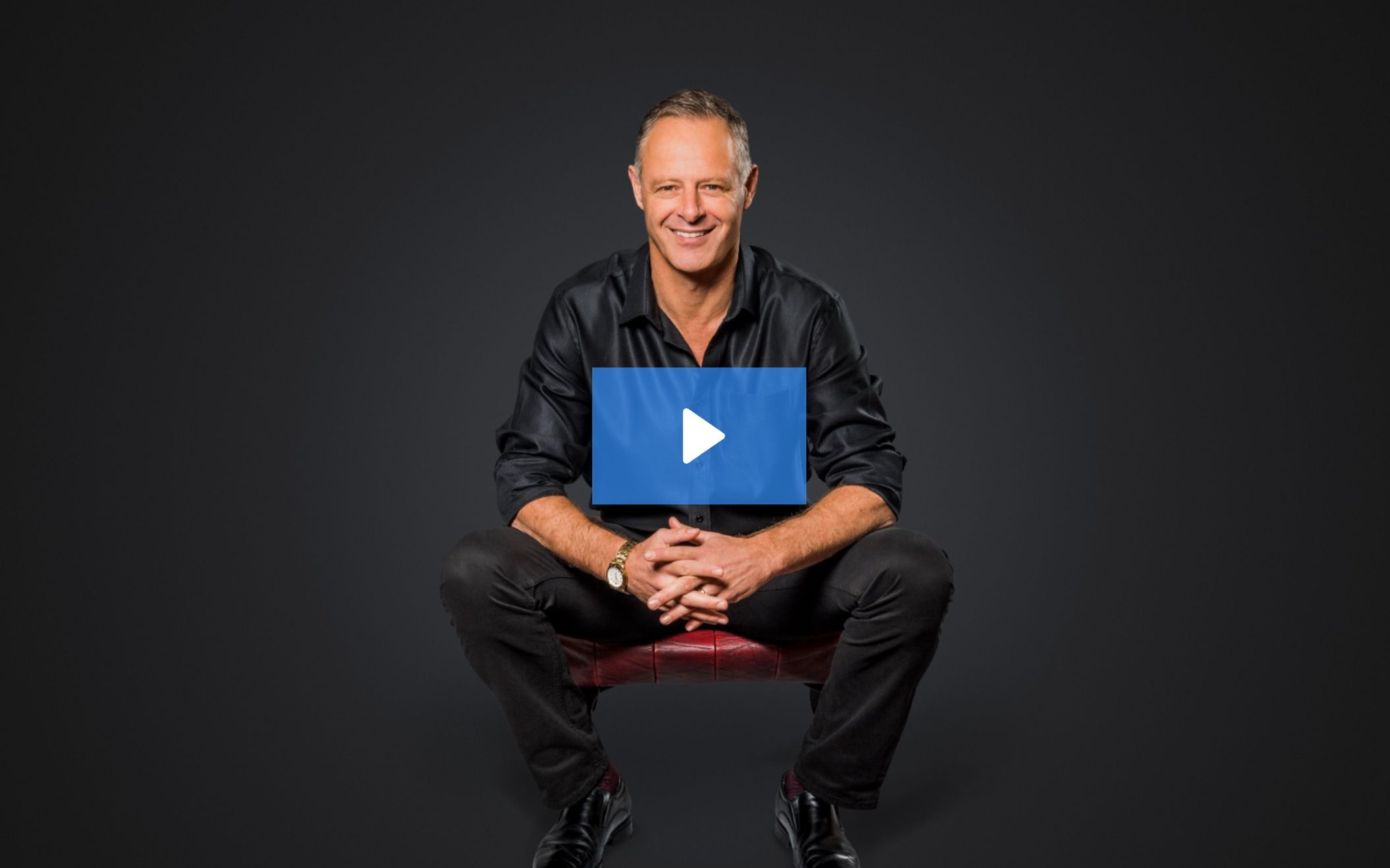
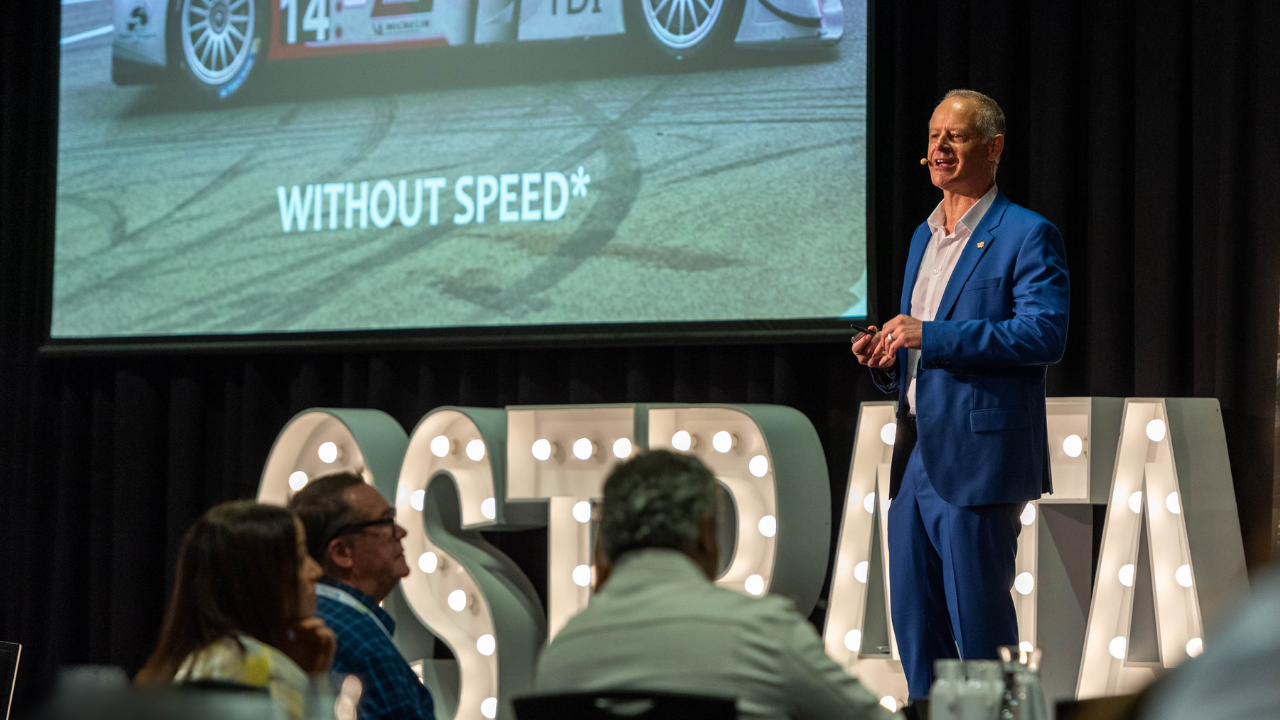
Professor John Hale is one of Australia's most sought-after speakers on strategy and leadership, delivering thirty keynotes a year for some of the world's biggest brands. A master storyteller with a theatrical on-stage presence, John will connect profoundly with your audience and craft his keynote to fit your industry, audience and conference theme.

John knows having a strategic mindset and great habits creates the brightest futures. He combines insight, humour and practical frameworks audiences can use immediately.

As founder of Hale Consulting Group, he brings 40 years of experience leading projects, facilitating workshops and coaching leaders. As a Visiting Professor, he has taught in five business schools including Singapore University and Melbourne Business School and is a member of the Global Speakers Federation. He is also the author of four best-selling books on strategy and leadership.  

Looking for a safe pair of hands?  Contact John to shape your event.

WHAT CLIENTS SAY

Peter Hedge

B&D National Dealer Manager

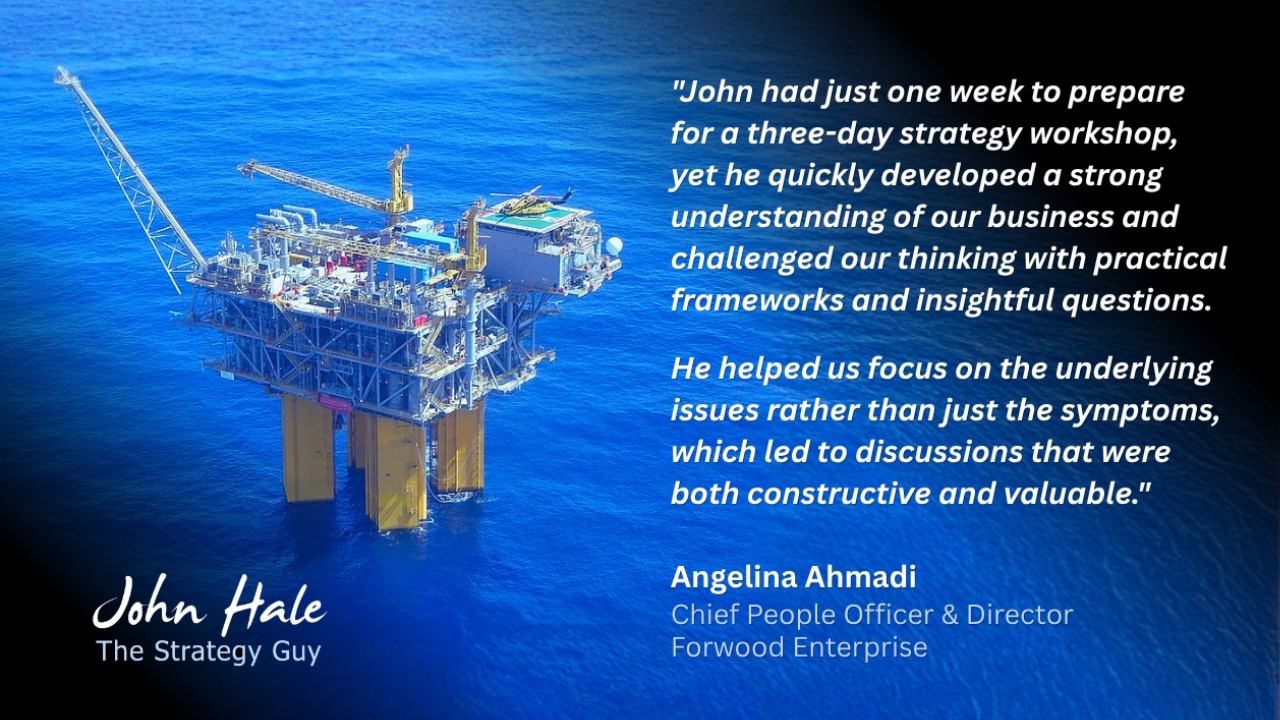
"Our entire team and network thoroughly enjoyed John’s Keynote on “Creating a Strategic Mindset” at our recent National Conference. 

John connected extremely well with the audience and made the often-challenging topic of strategy easy to understand and apply, at both a business and personal level.

John’s level of care and professionalism in preparing for our event was also excellent."

Mark Pidcock

Dealer Principal

"We hired Hale Consulting Group to assess our culture and help us modernise the way we operate as an organisation. The results were fantastic.

John Hale delivered an action packed and magical day of team building and awareness raising games and exercises.

Morale is higher and we are working more cooperatively and effectively as a result."

Christopher Dean

Founder

"John Hale cut quickly through to the core issues and then supported me in establishing simple yet valuable habits to manage my life more effectively, habits that I continue to use in my daily life years later.  

His insight and skills provide solutions for personal as well as corporate growth.

John operates at maximum integrity and comes highly recommended."

3Qs Every Leader Must Ask

Feature article by John Hale

After 35 years of sitting in strategy sessions with some of the world's most senior leaders, be they boardrooms in crisis, offsites under pressure or executive retreats the week after a market shock, I have noticed something.

The organisations that navigate uncertainty well are not smarter, better resourced or luckier than the ones that do not.

They just ask better questions. Consistently. Three specific questions, in the right order, every time.

I call them the three whats.

What Is Really Going On?

Most leadership teams think they already know the answer to this one. They do not.

What they know is the story they have told themselves about what is going on, filtered through their biases, their blind spots and the sanitised version of reality their organisation has learned to present upward.

In my work with Leaders and C-suite teams across industries, from global financial services to resources, retail and travel giants, professional associations to technology firms, the single most common failure I see is not bad strategy. It is leaders acting decisively on the wrong picture of reality.

Our brain is wired to fill gaps. When information is incomplete, it invents. When signals are ambiguous, it defaults to pattern. When the future is uncertain, it reaches for the nearest available analogy from the past.

The strategic leaders who outperform do not fight this tendency. They build habits that counteract it. They sense their environment deliberately. They ask uncomfortable questions. They create conditions where people feel safe enough to tell them what is happening, not what they want to hear.

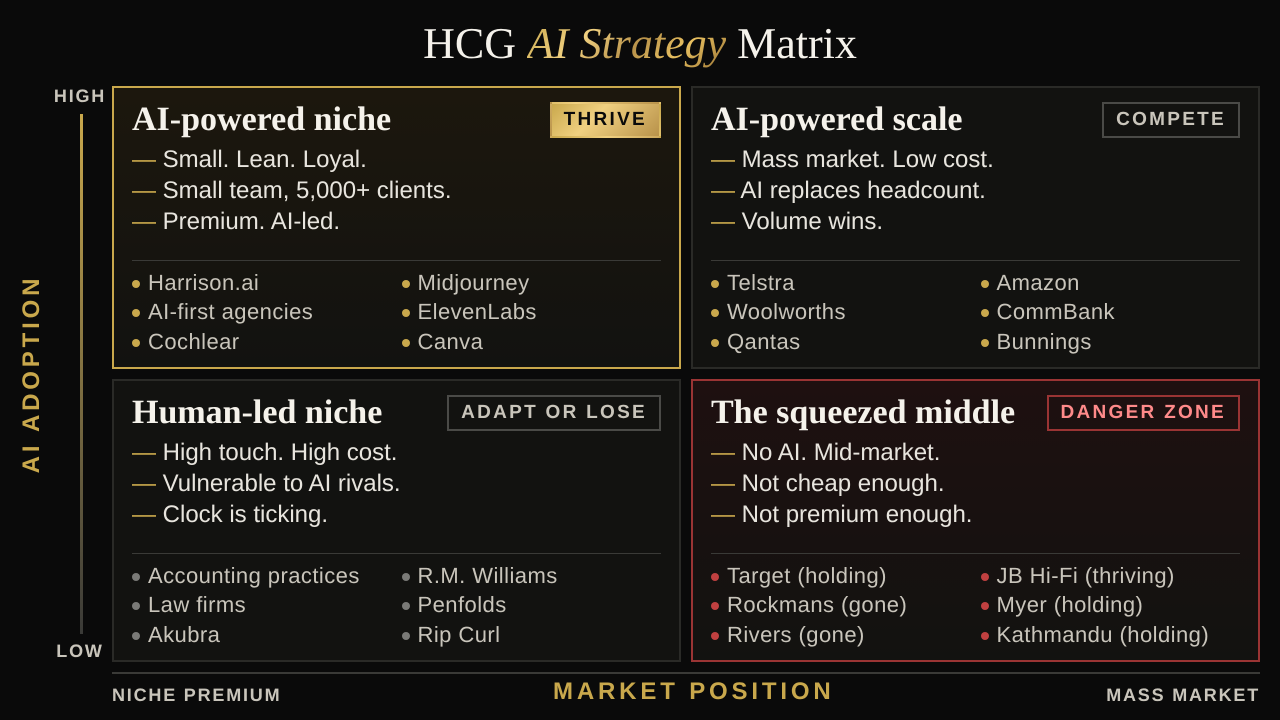
For most business leaders, "what is really going on" has a very specific answer right now: the competitive landscape is being redrawn around AI adoption. The matrix below captures it plainly.

Where does your business sit?

The mid-market player, neither premium enough to command loyalty nor cheap enough to compete on price is being structurally squeezed from both sides. Mass-market players are deploying AI to drive costs down. Niche premium operators are using AI to deepen their offer and serve fewer clients better. The businesses caught in the middle are exposed on both flanks.

Here is the striking reality: a software company that once needed 10,000 customers, 50 employees and millions in capital may now need 500 customers and 2 people. That dynamic is not limited to tech. It applies to trades, professional services, logistics and retail. The overhead argument for staying small just got dramatically stronger.

Before any strategy conversation, the first question is always: what is really going on here?

What Are Our Options?

Most leadership teams present two options to the Board. Option A is what they have always done. Option B is the obvious next move everyone can already see.

Neither of these is a strategy. They are a false binary.

The leaders who build genuinely future-proof organisations have learned to generate a third option, a fourth, sometimes a fifth. Not because they are indecisive, but because they understand that better decisions come from a richer set of choices.

One of the most consistent findings from my 35 years of strategy consulting is this: the quality of your eventual decision is almost entirely determined by the quality of the options you considered before making it.

For business owners, the options question deserves a very deliberate reframe. The question is not "should we use AI?" It is: "Which parts of my business still require me to employ someone full-time, and which can now be orchestrated through AI agents and specialist contractors?" Those who answer this question deliberately and act on it will outcompete those who drift into the answer too late.

Human and AI collaboration are now changing what is possible here. The best leaders already leaning into this and using technology to sense signals earlier, model scenarios faster and stress-test assumptions more rigorously. This gives them a structural strategic advantage.

There is another signal worth reading carefully. Research shows around 75% of workers are already bringing their own AI tools to work because company-issued ones feel too generic. This is both a warning and an opportunity. Your best people are already adapting. The question is whether you are leading that change or discovering it too late.

The second question is never "should we do this?" It is always: "What are all our options, including the ones we have not thought of yet?"

What Will We Do?

This is where most strategy dies.

The first two questions can be answered in a room. The third one has to survive the room and then live in the organisation for months or years after everyone has gone back to their desks.

A decision that cannot be communicated clearly is not a decision. A strategy that cannot be aligned across an organisation is not a strategy. A commitment that leadership cannot model in their own behaviour will never be followed.

The organisations I have seen navigate volatility, disruption and genuine crisis most effectively all share one thing: their leaders move from clarity to commitment without hesitation. They know what they have decided, they can say it in one sentence and they build their next 90 days around it.

For business leaders, the commitment is very specific: redraw the boundary of the firm. Decide which roles are core and which are now better served by AI agents, automation and specialist contractors. Then act on that decision visibly, so your team understands the direction and can follow.

The third question; “What we will do?” is a commitment, not a conclusion. It is where the thinking ends and the leading begins.

Why These Three, In This Order

The three whats are not new. Leaders have been wrestling with versions of these questions forever.

What is new is the pace at which they need to be answered, the complexity of the information environment in which they need to be answered and the speed at which a wrong answer compounds.

The six-step Strategic Mindset Process I have developed over three decades, and written about in The Strategy Book, provides the tools to answer each of these questions with rigour: sensing your environment, seeing beyond the next horizon, connecting with the right stakeholders, planning future value, focusing on what truly matters and moving faster with influence.

In the room, under pressure, with an executive team that has 90 minutes before the next flight, you need three questions.

What is really going on?

What are our options?

What will we do?

The Leaders Who Get This Right

Kerry-Anne Walker, Global Events Leader at Flight Centre Travel Group, brought me in for their annual Board and C-suite offsite. After the session, she noted that the process had laid the foundation for ongoing discussions. A strategic mindset, once installed in a leadership team, does not stop working when the day ends.

Pranish Rai from CA ANZ reflected on this after I addressed more than 400 delegates at their National Accounting Online Conference, noting that the process made the often-confusing topic of strategy very understandable, and explained the process of future-proofing strategies for firms and careers.

The goal is not another strategy framework to file. It is a dispassionate and powerful thought process that changes how a leadership team asks hard questions.

Leaders require courage and foresight to step into who they must become. Evolved leaders don't watch change — they architect it. They harness AI as the most powerful force multiplier in a generation.

Are You Future and AI Ready?

My keynote ‘Are Future and AI Ready?’ supports leaders to develop the mindset shifts, predictive thinking and strategic clarity they need in the new AI world.

Your leaders will evolve by:

  • Being humble and willing to revise old beliefs as AI rewrites the rules
  • Cultivating curiosity and the ability to think in terms of probabilities
  • Applying predictive analysis and AI insights to make smarter decisions
  • Redrawing the boundary of the firm and connecting the dots in new ways

To bring these three questions and the strategic clarity that follows to your conference, board retreat or leadership offsite, contact John to discuss a keynote custom built for your audience.

#Strategy #FutureReady #AI #StrategicMindset #CSuite #AILeadership #Business


LATEST BLOG/ARTICLES

FOR BRIGHTER FUTURE

COMEDY STRATEGY

SOMETHING BLUE

STRATEGIC TEAMWORK

EVOLUTIONARY STRATEGY

KNEE STRATEGY

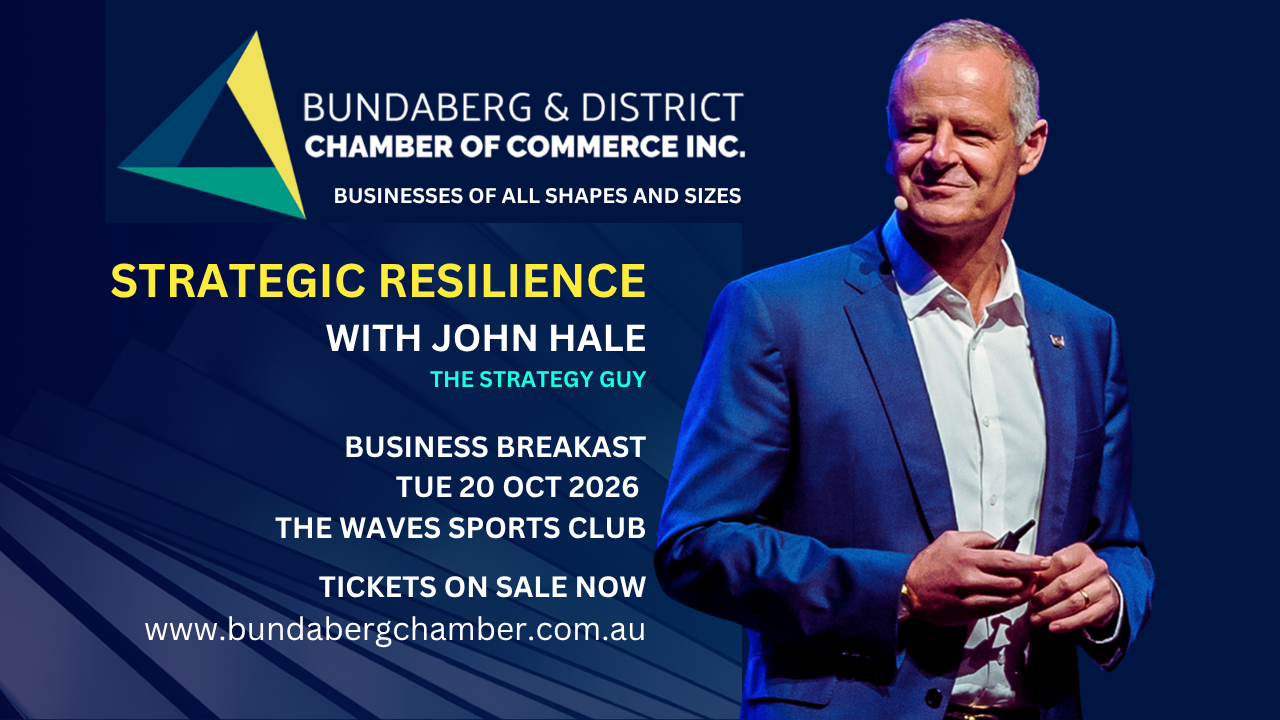
STRATEGIC RESILIENCE

LATEST BOOK 

The CEO Book will help you navigate the twelve habits of highly successful CEOs. You will learn how to care for your people, know which way to go and align and allocate resources effectively.

John Hale reveals that becoming a successful CEO is an inner transformation requiring a purposeful journey amidst harsh realities.

However, clues exist, and John shares lessons from CEOs and leaders of twelve evergreen organisations, including Tesla, Netflix, Estée Lauder, Microsoft, Stitch Fix, San Antonio Spurs, Apple, the House of Saud, Merck and Co., YouTube, PepsiCo, and the Navy Seals.


FIND OUT MORE VIEW ALL OF JOHN'S BOOKS

LISTEN

TO JOHN

Close

50% Complete

Email me

The Strategy Note