Ideas, strategies and tactics
The Strategy Guy's Blog
THE STRATEGY BOOK
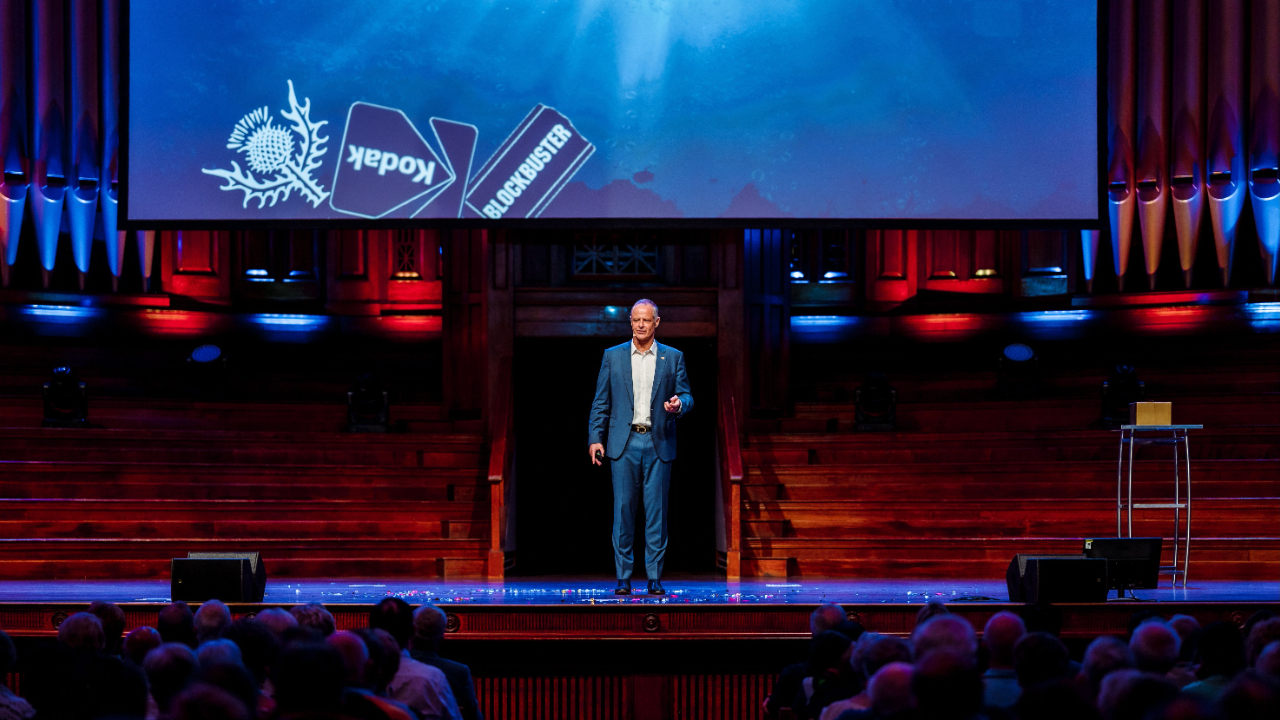
Looking back at history, we can see examples of businesses that failed to create options and make smart bets, leading to their downfall. Do you remember Encyclopaedia Britannica, Kodak and Blockbuster?
Encyclopaedia Britannica, Kodak and Blockbuster failed to adapt to changing market conditions and were eventually overtaken by competitors who did.
In the past, movie rentals required customers to physically visit a store and then rewind the tape before returning it. The rise of digital streaming services like Netflix has made this process obsolete, rendering traditional movie rental stores like Blockbuster irrelevant.
Similarly, the advent of digital photography rendered Kodak's film-based business model obsolete.
And although Encyclopaedia Britannica was the only way to accidentally learn about the mating habits of sloths, it failed to embrace the internet successfully.
In the constantly evolving landscape of the business world, leaders need to develop a strategic mindset and c...

SAFETY THEN STRATEGY

I love presenting to community leaders across the regions. They are frequently beautiful living examples of courage, resilience, hospitality and kindness.
This month was no exception. Petra Van Beek invited me to speak to 70 business leaders in Gympie. Gympie's Leaders were such an enthusiastic audience. As a speaker, walking into a room full of people who already feel safe with each other and are ready to learn and have fun makes my job super easy.
A few days later, I received a kind testimonial from Petra:
'Our community leaders appreciated John Hale’s Strategic Mindset Presentation. John gave our members a series of simple yet powerful ways to grow and scale their businesses in new ways. We all learnt the absolute importance of making strategic choices to future-proof our businesses.
I recommend John as a highly professional speaker who provides a great mixture of entertaining stories, empowering ideas and thoughtful audience engagement and interaction.'
To succeed with any str...
STRATEGIC CEOs

This month I will commence writing my next book, 'The Strategic CEO', for CEOs or those on the path to becoming one. To succeed, CEOs need to embrace several paradoxes, which I will unpack in the book.
Strategic CEOs are north star leaders who embody twelve extraordinary habits.
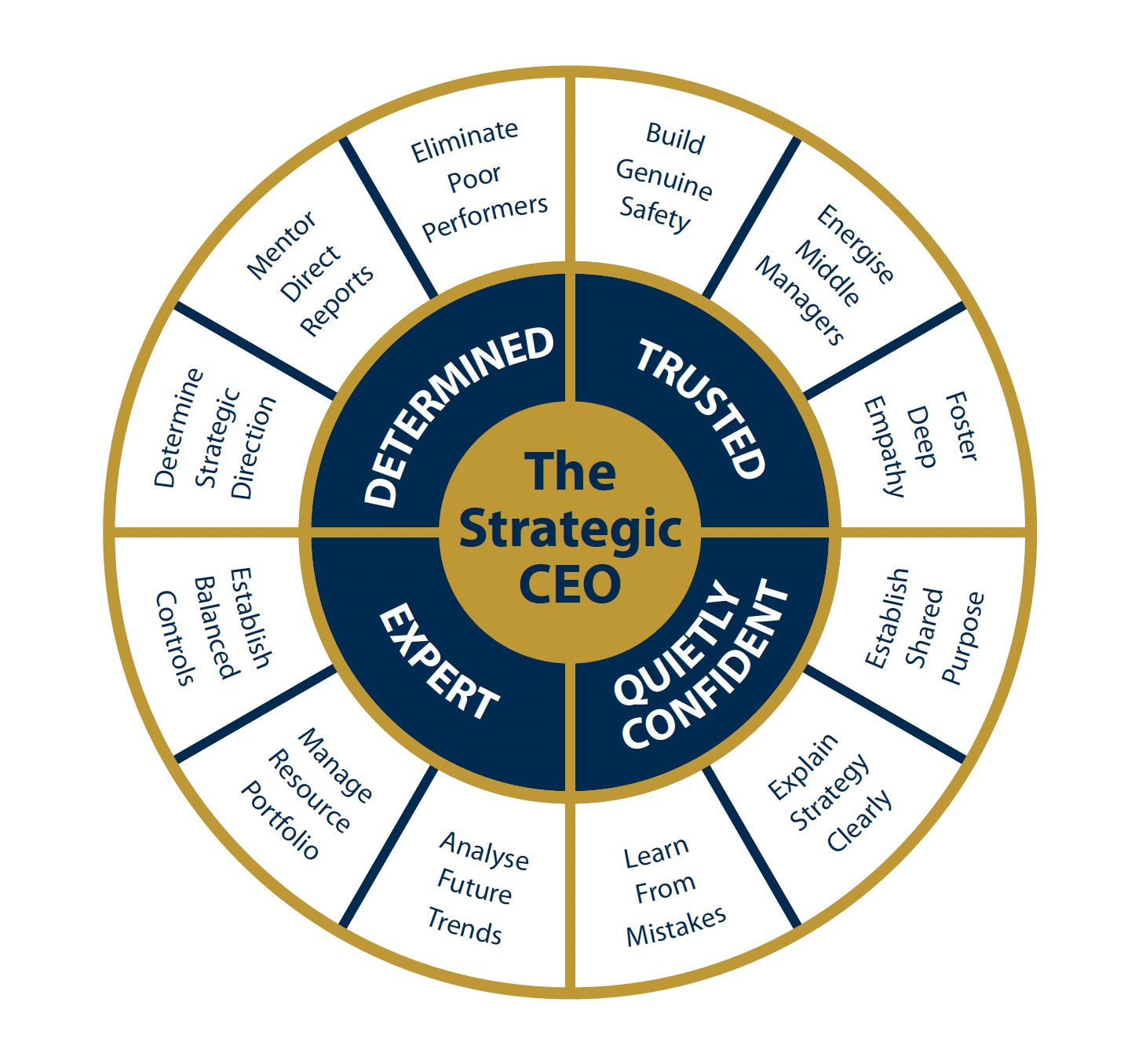 Strategic CEOs actively steer their organisations. Strategic CEOs don't get stuck in a Boardroom or behind a desk. They repeatedly engage with the business, its employees, customers, suppliers and shareholders. For CEOs, their time, not money, is the scarcest resource they have to ensure their firm grows profitably.
Demands on CEOs come from many quarters. If a CEO falls behind, they are forced to shift from being proactive to being reactive. Proactivity creates a virtuous cycle with many opportunities. Reactivity can create a vicious cycle, with increasingly riskier fires for a CEO to put out.
To mitigate the risks of tripping up, lagging behind or falling into a reactive spiral, CEOs need to think and ac...
JUGGLING FASTER

The positive market response to Apple's new Silicon computers highlights the power of parallel processing. Apple achieved this with a reduced instruction set computer (RISC) design. RISC microprocessors are not new. In the late 1980s, as a Systems Engineer at Hewlett Packard, I compiled and executed code on a quarter-of-a-million-dollar Unix workstation that housed the world's first and fastest parallel reduced instruction set microprocessor (PRISM). Apple's M1 microprocessor is 10,000x faster than the first PRISM microprocessor and sells for just eight hundred dollars!
RISC computing breaks down complex software instructions into smaller parts that run in parallel on microprocessor arrays so that software programs compile and execute much faster. While computers can handle multiple tasks simultaneously, by comparison, humans are poor at multitasking.
The pandemic highlighted human multitasking limitations to me. Once CEOs became distracted with managing the moment-to-moment issues o...
LEADERSHIP IN CRISIS

Global leadership is in crisis.
It is difficult to find examples of good strategic leadership anywhere.
From a laundry list including Boris Johnson, Donald Trump, Benjamin Netanyahu, Vladimir Putin, and Xi Jinping, one might mistake incompetence, bribery, corruption, embezzlement, ethnic cleansing and genocide as valid strategies for top leaders.
Oligarchic business leaders like Amazon's Bezos and Facebook's Zuckerberg, simply offer unpalatable examples. Despite his immense wealth, Bezos lacks the philanthropic generosity shared by many who give generously despite having very little. Zuckerberg has us addicted to two and a half hours of social media per day and repeatedly violates our trust and privacy in his pursuit of profit.
Young Swedish environmental activist, Greta Thunberg's 2019 address to the United Nations could well have been addressed to business leaders:
"You have stolen my dreams and my childhood with your empty words. And yet I'm one of the lucky ones. People are su...
EMPLOYEE ENGAGEMENT

Benefits of Effective Employee Engagement
Employee engagement has long been recognised as a key factor in the success of any business. Engaged employees are more productive, more committed, and more likely to remain with their company long-term. Yet, despite its importance, many companies struggle to engage their workforce effectively. In this article, we will explore the benefits of effective employee engagement and provide practical tips for improving it in your organization.
The Business Case for Employee Engagement
Studies have consistently shown that engaged employees are more productive, leading to improved financial performance for their companies. According to a survey by Gallup, companies with highly engaged employees experience 17% higher productivity and 21% higher profitability compared to those with low engagement levels.
In addition to increased productivity, engaged employees are also more likely to provide excellent customer service. They are more motivated to go th...
Stay connected with monthly newsletter
Recent Posts
Author
John Hale
John Hale, The Strategy Guy, works as a Speaker, Coach, Professor and Author. He teaches in business schools, speaks at conferences, educates start-ups and advises global brands.
It was my honour to support such a committed group that helps so many. Zero Asbestos Directors Richard Ayres and Megan Ayres sent me a beautiful testimonial this afternoon.
"With an apprehensive team from past experiences, they were all surprised to get so much out of the time spent with John at our two-day Strategic Leadership Intensive.
John kept us all on track, gave us a good road map, helped us see the business more clearly, and gave solutions for some stagnant trouble spots. We had fun undertaking team building activities, from spaghetti towers to basketball challenges and learnt the importance of saying 'and' instead of 'but'.
An excellent team-building weekend! We high...